Written by Nouman Zulfiqar BSc Dental Technology — Lead Dental Technician, Classic Dental Lab, Folkestone, Kent
Choosing between zirconia and porcelain-fused-to-metal (PFM) crowns depends on factors such as strength, aesthetics, biocompatibility, clinical indication and cost. For dental professionals, understanding the differences between these two restorative options can help when selecting the most appropriate solution for each patient.
In this guide, we compare zirconia and PFM crowns across strength, aesthetics, durability, biocompatibility, clinical applications and turnaround times, helping UK dental professionals make informed decisions when working with a dental laboratory.
Whether you’re a practice in Folkestone, Ashford, Canterbury, Dover, or anywhere in the UK sending cases to a trusted dental laboratory, this guide will help you prescribe the right crown material for every case.
What is a Zirconia Crown?
A zirconia crown is a dental restoration made entirely from zirconium dioxide — a high-strength ceramic material offering exceptional durability, superior aesthetics, and complete biocompatibility.
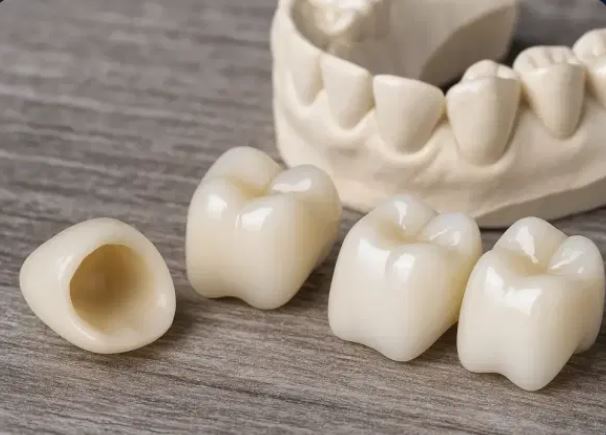
Zirconia (zirconium oxide, ZrO2) is a white crystalline ceramic that has transformed modern restorative dentistry over the past two decades. Its exceptional strength-to-fracture ratio and excellent biocompatibility made it ideal for dental use, and today zirconia crowns are among the most prescribed crown types by dental practices we work with, both here in Kent and across the UK.
At Classic Dental Lab, our Folkestone-based technicians manufacture two types of zirconia crowns:
Monolithic zirconia — a single block of zirconia milled to full contour without any layered porcelain. Offers maximum strength with minimal chipping risk. Ideal for posterior teeth and bruxism patients.
Layered zirconia (PFZ) — a zirconia substructure with hand-layered porcelain applied on top for superior translucency and aesthetics. Ideal for anterior teeth where lifelike appearance is critical.
What is a PFM Crown?
A PFM crown (porcelain-fused-to-metal) is a dental restoration combining a metal substructure for strength with a porcelain outer layer for aesthetics — a combination that dominated UK dentistry for over five decades.
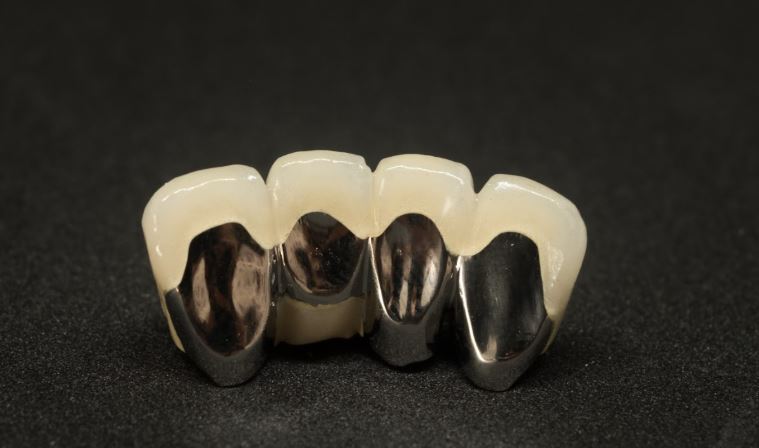
PFM crowns consist of a cast metal framework — typically cobalt-chromium, nickel-chromium, or a precious metal alloy — over which dental porcelain is hand-layered and fired. The result is a restoration that is structurally strong while appearing tooth-coloured.
While PFM crowns have largely been displaced by zirconia in private dentistry, they remain widely used for:
- Long-span bridges where flexural strength is critical
- NHS cases requiring cost-effective restorations
- Posterior cases where aesthetics are secondary to function
- Cases where metal margins are clinically preferable
At our Kent dental laboratory, we continue to manufacture high-quality PFM crowns and bridges using premium cobalt-chromium alloys and hand-layered dental porcelain — trusted by practices across Folkestone, Kent, and the wider UK for reliable, proven restorations.
Zirconia vs PFM: Strength and Durability
Zirconia is significantly stronger than PFM in terms of fracture resistance — with monolithic zirconia offering flexural strength of 900–1,200 MPa compared to approximately 400 MPa for PFM restorations.
Research published in the National Library of Medicine confirms that CAD/CAM-fabricated zirconia crowns exhibit superior marginal fit compared to PFM copings, with mean marginal discrepancies of 0.0172mm for zirconia versus 0.0375mm for PFM — more than twice as precise. This superior marginal fit reduces microleakage and secondary caries risk.
Key strength comparisons:
| Property | Zirconia | PFM |
| Flexural strength | 900–1,200 MPa | 350–450 MPa |
| Fracture toughness | Excellent | Good |
| Chipping risk | Low (monolithic) | Higher (porcelain layer) |
| Marginal fit | Superior (CAD/CAM) | Good (cast) |
| Wear on opposing teeth | Low–moderate | Moderate |
| Lifespan | 15–25 years | 10–15 years |
For high-load posterior cases, bruxism patients, or full-arch restorations — zirconia is the clear clinical choice, and our Kent lab produces both to exacting UK MDR standards.
Zirconia vs PFM: Aesthetics
Zirconia offers superior aesthetics to PFM in most clinical situations — particularly in the anterior region — due to its translucency, natural light reflection, and absence of metal margins.
The most significant aesthetic disadvantage of PFM crowns is the metal margin — a grey line that appears at the gingival margin as gum tissue recedes with age or periodontal change. This is particularly problematic for anterior restorations and high smile line cases.
Aesthetic comparison by zone:
Anterior teeth (incisors and canines):
- Layered zirconia (PFZ) — best choice for maximum translucency and lifelike appearance
- E.max lithium disilicate — excellent alternative for single unit anterior restorations
- PFM — not recommended due to metal margin visibility risk
Posterior teeth (premolars and molars):
- Monolithic zirconia — ideal for strength and acceptable aesthetics
- PFM — appropriate where cost is a primary consideration
- Layered zirconia — when posterior aesthetics are important to the patient
Full arch restorations:
- Monolithic zirconia — preferred for All-on-4 and All-on-6 frameworks
- PFM bridges — appropriate for long-span bridges in selected cases
Zirconia vs PFM: Biocompatibility
Zirconia is one of the most biocompatible materials available in modern dentistry — it is completely metal-free, hypoallergenic, and has no reported cases of allergic reaction.
PFM crowns contain metal alloys — typically cobalt-chromium or nickel-chromium — which carry a small but documented risk of metal sensitivity in susceptible patients. Nickel allergy affects approximately 10–15% of the population, making metal-free alternatives clinically important for a significant portion of patients.
For patients with:
- Known metal allergies or sensitivities
- Concerns about metal in their restorations
- Autoimmune conditions
- Implant-retained restorations
Zirconia is always the preferred material choice over PFM.
Zirconia vs PFM: Clinical Indications
The choice between zirconia and PFM should be based on tooth location, occlusal load, patient aesthetic expectations, and budget — not simply material preference.
Prescribe zirconia when:
- Anterior teeth requiring maximum aesthetics — use layered zirconia or e.max
- Posterior teeth in patients with bruxism or high occlusal load
- Implant-supported crowns and bridges
- Full-arch restorations including All-on-4 and All-on-6
- Patients with metal allergies or sensitivities
- Long-term private restorations where longevity is prioritised
- Short-span posterior bridges (up to 3 units)
Prescribe PFM when:
- Long-span bridges (4+ units) where flexural strength of metal is beneficial
- NHS cases requiring cost-effective crown materials
- Posterior restorations where budget is the primary consideration
- Cases where existing adjacent PFM restorations need to be matched
Turnaround Times — Dental Lab Kent
As a dedicated crown and bridge dental laboratory in Folkestone, Kent, we offer fast, reliable turnaround times for practices across Kent and the wider UK.
| Crown Type | Standard Turnaround |
| Monolithic Zirconia Crown | 5–7 working days |
| Layered Zirconia Crown (PFZ) | 7–10 working days |
| PFM Crown | 5–7 working days |
| Zirconia Bridge (3 unit) | 7–10 working days |
| PFM Bridge (4+ unit) | 7–10 working days |
| E.max Crown | 7–10 working days |
| Implant Crown (Zirconia) | 7–12 working days |
Practices local to Folkestone and the wider Kent area benefit from faster courier turnaround and, where needed, direct drop-off. Rush cases may be accommodated on request — contact our Kent lab on 01233884388 before sending the case to confirm availability.
How to Send a Crown Case to Our Dental Lab in Kent
Classic Dental Lab accepts both traditional analogue impressions and digital STL files from all major intraoral scanners — making it simple for practices in Kent and across the UK to send cases however suits your workflow.
For analogue cases: Post or courier your impressions, opposing model, bite registration, and shade prescription to our Folkestone laboratory: Classic Dental Lab, 16a Shorncliffe Road, Folkestone, Kent, CT20 2SF
Include our completed lab docket with every case — download it from our website or request free pre-printed dockets for your practice.
For digital cases: Connect your intraoral scanner directly to Classic Dental Lab through your scanner portal. We accept digital cases from 3Shape TRIOS, iTero, Medit, Dentsply Sirona, Panda Scanner, Aoralscan, Carestream, Luanca, Aidite, Fussen, Dexis, and Ivoclar Digital — from practices in Kent and throughout the UK.
Shade guidance: For anterior zirconia cases, include a shade photograph taken under natural light with the shade tab in position. For complex aesthetic cases, contact our Kent-based technicians before sending and we will guide you through our shade matching process.
Visit our services page for a full overview of crown and bridge restorations available from our Folkestone dental laboratory.
Why Choose Classic Dental Lab — Your Dental Laboratory in Kent?
Classic Dental Lab is an MHRA-registered dental laboratory based in Folkestone, Kent, providing precision zirconia and PFM crowns to NHS and private dental practices across Kent and the UK.
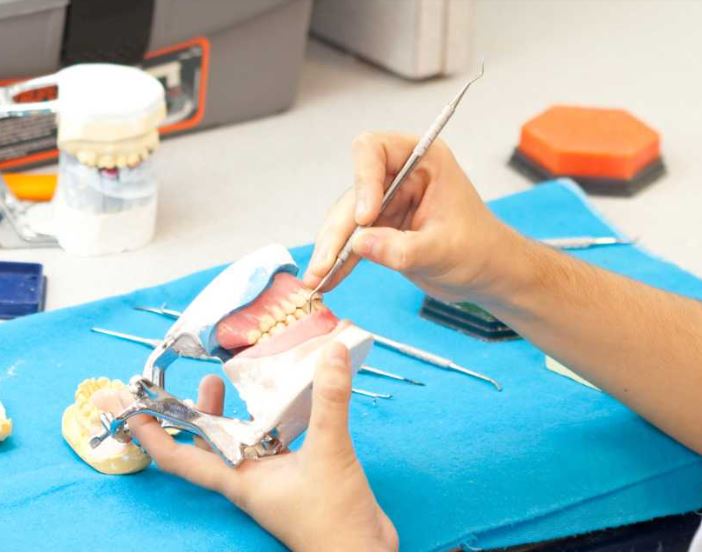
Led by Nouman Zulfiqar BSc Dental Technology, our Folkestone laboratory combines CAD/CAM digital workflows with traditional technician craftsmanship to deliver crowns and bridges that meet the highest UK standards — with the added benefit of a local, personal service for practices based in Kent.
What dental practices say about working with our Kent dental lab:
- Fast, reliable 5–7 day turnaround on zirconia and PFM crowns
- Precise shade matching with photographic shade guidance available
- NHS and private cases welcome, from Folkestone, Kent and across the UK
- Digital scan compatible — all major intraoral scanners accepted
- MHRA-registered and fully UK MDR compliant
- Declaration of Conformity provided with every case
Ready to send your first crown case to a dental lab in Kent you can trust? Contact us today or call 01233884388 to discuss your practice’s requirements.
Summary: Zirconia vs PFM — Which Should You Prescribe?
In most clinical situations in 2026, zirconia is the superior choice — offering better strength, aesthetics, biocompatibility, and longevity than PFM. However, PFM remains the appropriate choice for long-span bridges, NHS cases, and budget-sensitive restorations. Our Kent dental laboratory produces both to the same exacting standard.
Quick decision guide:
- Anterior single unit → Layered zirconia or E.max
- Posterior single unit → Monolithic zirconia
- Short-span bridge (3 unit) → Zirconia
- Long-span bridge (4+ unit) → PFM or zirconia framework
- Implant crown → Zirconia
- All-on-4 / All-on-6 → Monolithic zirconia
- NHS case → PFM or monolithic zirconia
- Bruxism patient → Monolithic zirconia
- Metal allergy patient → Zirconia only
For any complex prescribing decisions, our team at Classic Dental Lab — Folkestone, Kent — is always happy to discuss material selection with you before you send the case. Get in touch.
About the author: This article was written by Nouman Zulfiqar BSc Dental Technology, Lead Dental Technician and founder of Classic Dental Lab — an MHRA-registered dental laboratory based in Folkestone, Kent, serving NHS and private dental practices across Kent and the UK. Company Registration No: 16927633.